
Bridge Design
Prestressed Concrete Pedestrian Walkway
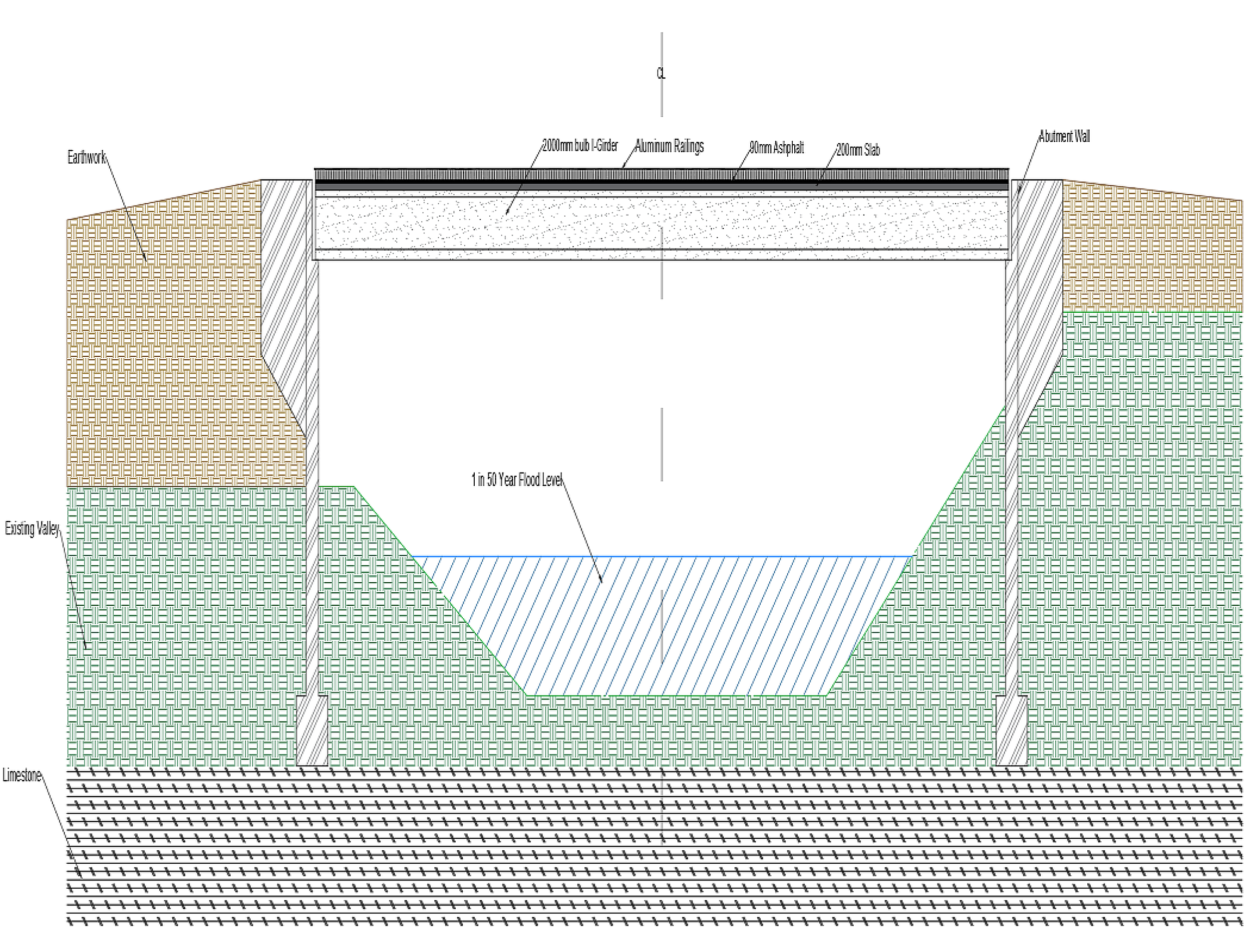
Elevation Drawing of Bridge Superstructure
Lakeshore Boulevard Bridge Extension
As part of the Don River Revitalization project on Toronto’s waterfront, my capstone design team was tasked with designing the Lakeshore Boulevard Bridge extension over the Don River. The project deliverables included abutment walls, a bridge pier with deep caisson foundation and steel pile cap, and a six-span reinforced concrete hollow-core bridge.
My responsibilities focused on analyzing and designing the hollow-core deck slab and pier cap beam, as well as developing the project schedule. Using SAP2000, I conducted structural analysis of the bridge deck under various gravity load combinations and performed influence line analysis to generate moment and shear envelopes, identifying locations where vehicle loads produce maximum internal forces.
Design work adhered to the Canadian Highway Bridge Design Code (CSA S6-19), the Concrete Design Handbook (CSA A23.3-19), and the CISC Handbook of Steel Construction. Due to the pier cap’s large depth relative to pile spacing, I performed finite element analysis in VecTor2 to evaluate compressive strut formation and determine where shear stiffeners were required under high concentrated loads.
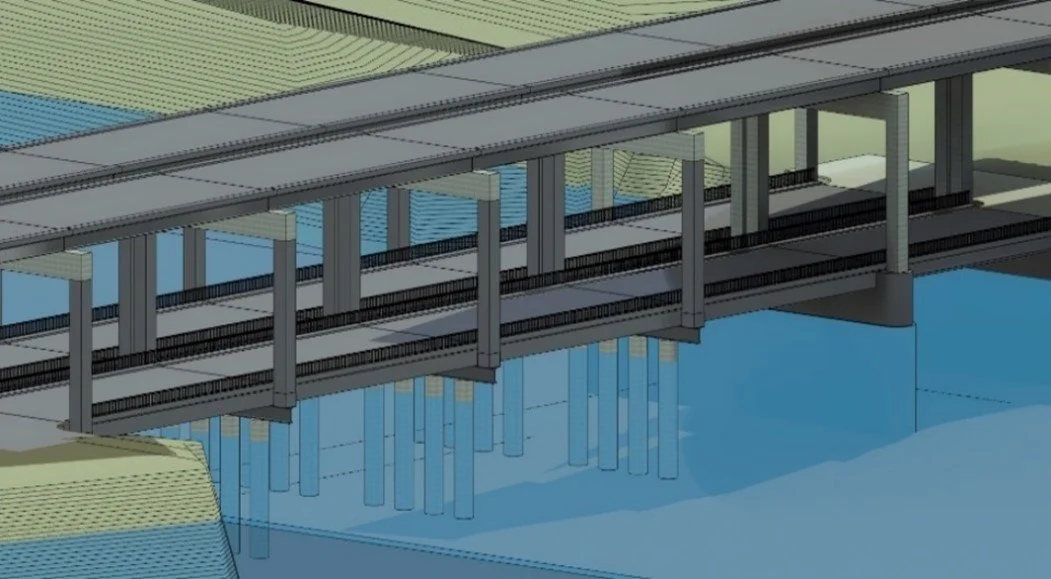
Isometric Rendering of Proposed Design
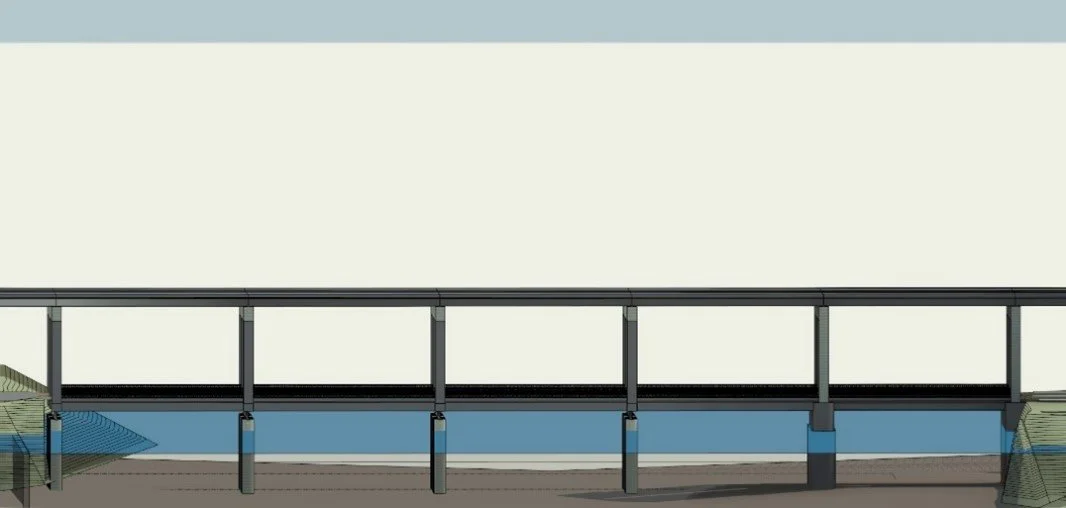
Elevation Rendering of Proposed Design
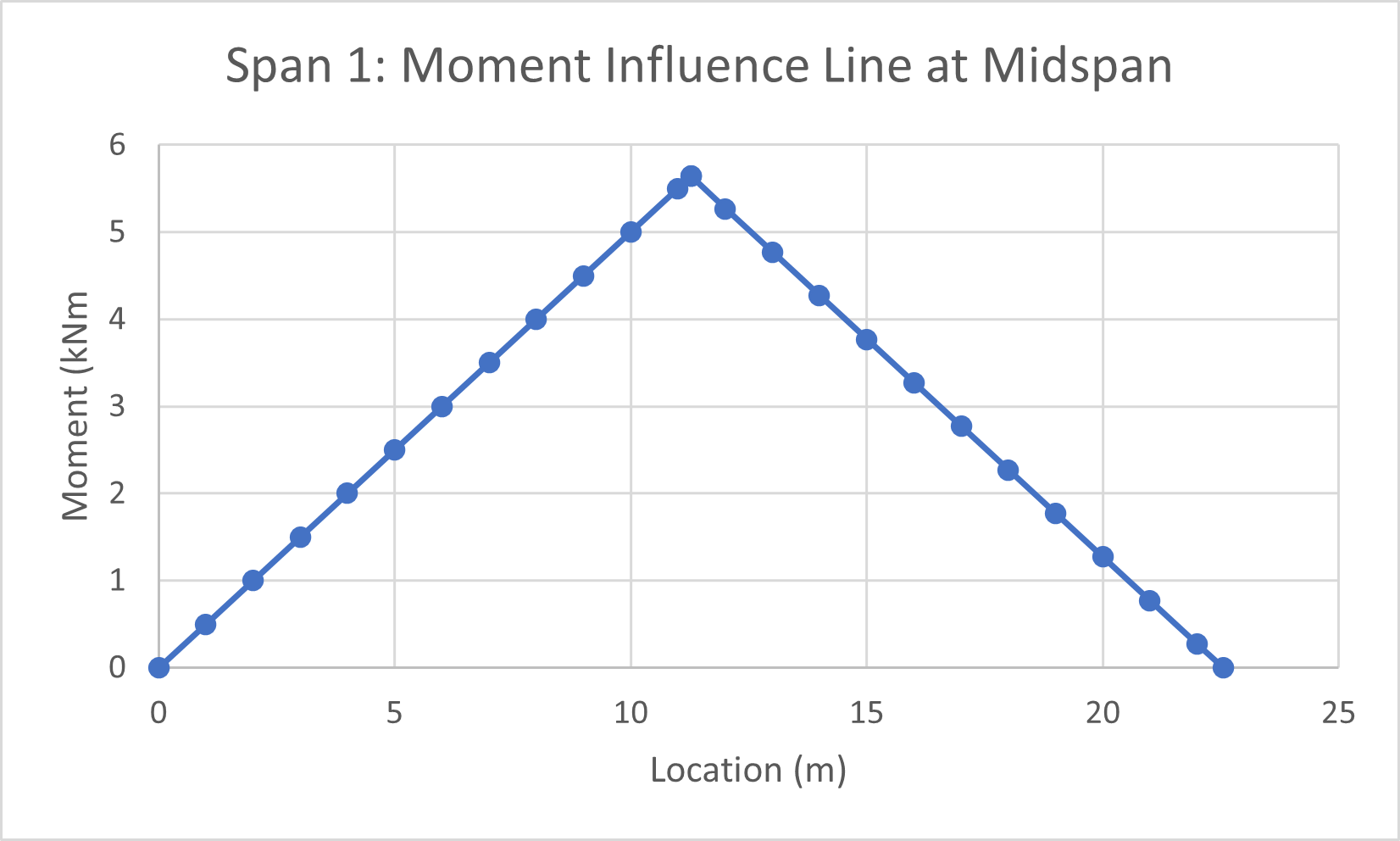
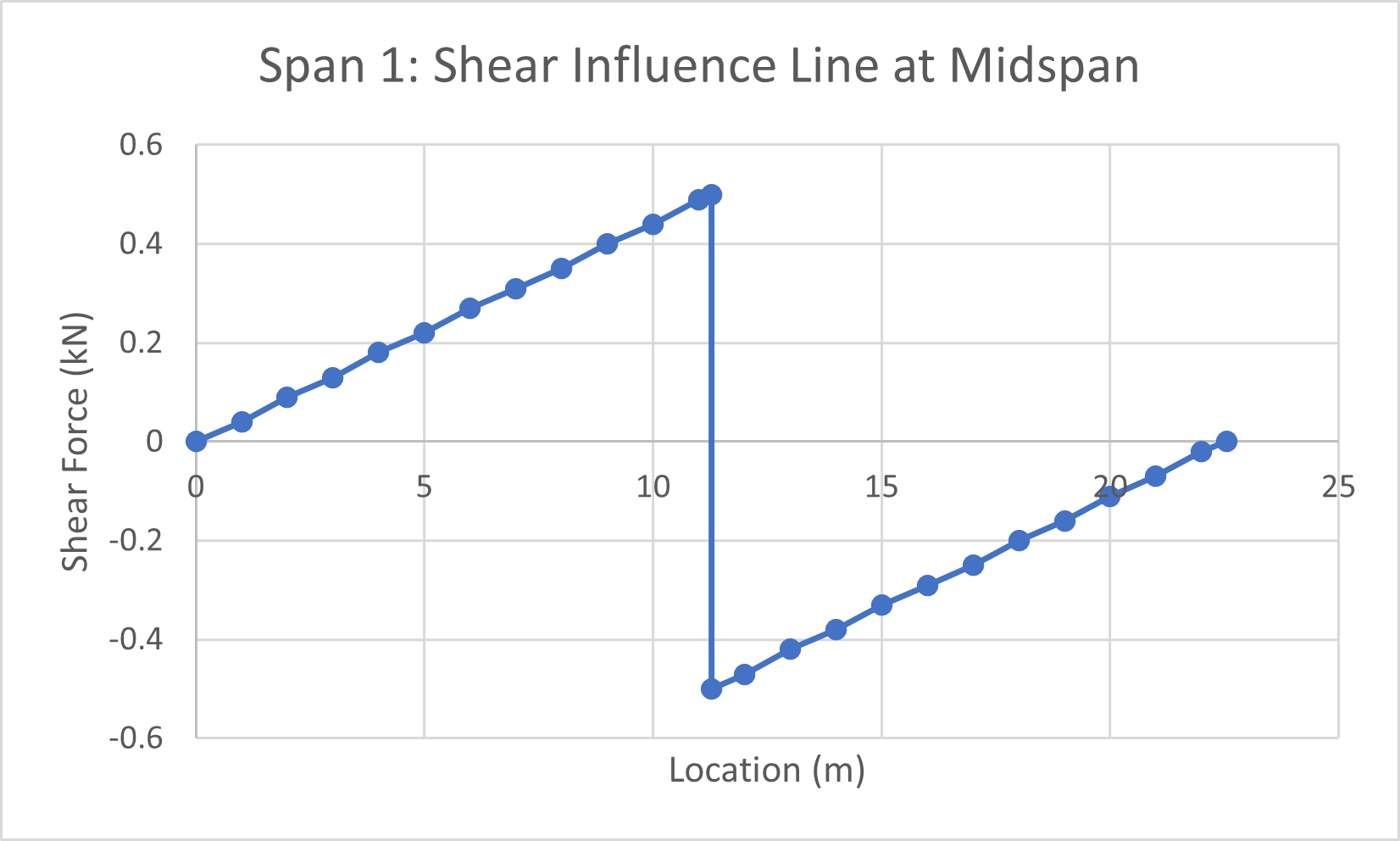
Moment and Shear Envelopes for Single Span of Bridge
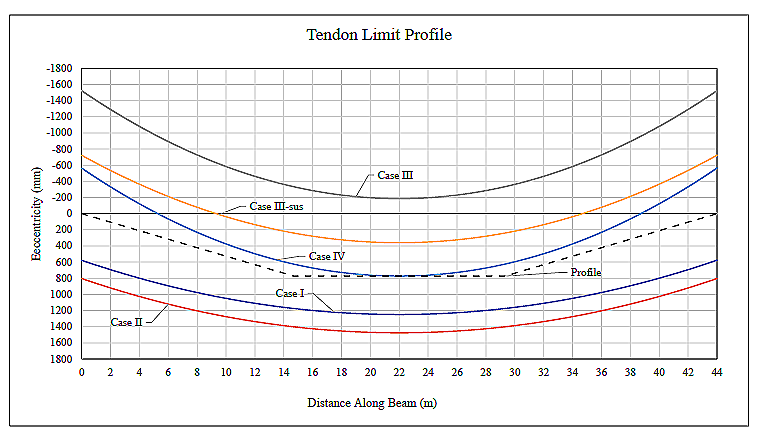
Double Harped Tendon Profile
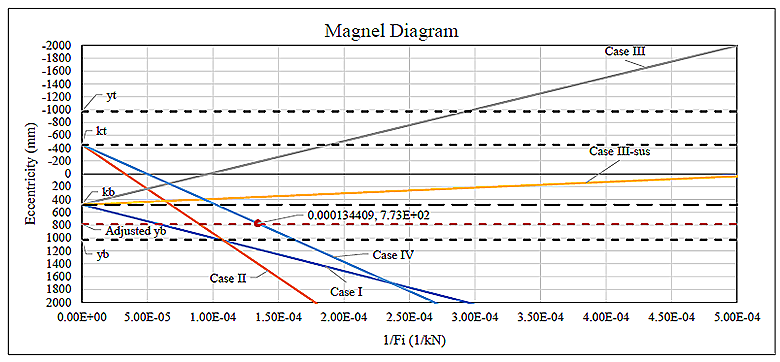
Magnel Diagram for Eccentricity and Prestress Force
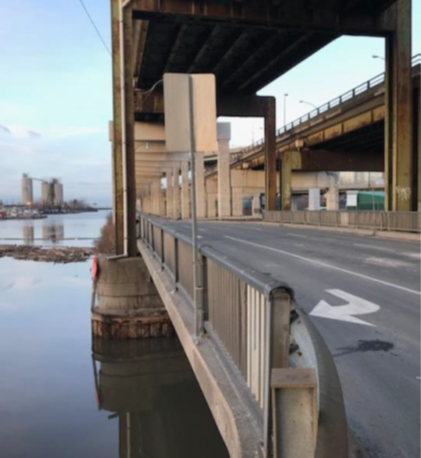
Lakeshore Boulevard Bridge at Don River
A single-span precast/prestressed concrete girder with a reinforced concrete deck was designed as a pedestrian walkway in Toronto. Project deliverables included the preliminary bridge design and prestressing requirements.
The prestressed girder design involved a time-step analysis of prestress losses due to elastic shortening, fatigue, creep, shrinkage, and relaxation. Tendon layout and prestressing force were determined using Magnel diagrams to satisfy serviceability criteria. For ultimate limit states, the use of high-strength, low-relaxation strands eliminated the need for added longitudinal reinforcement; however, the prestressing force alone was insufficient for shear, so stirrups were incorporated.
Finally, girder camber was calculated to counteract deflection from vertical loads, and prestressing development lengths were determined to ensure effective force transfer from tendons to concrete.
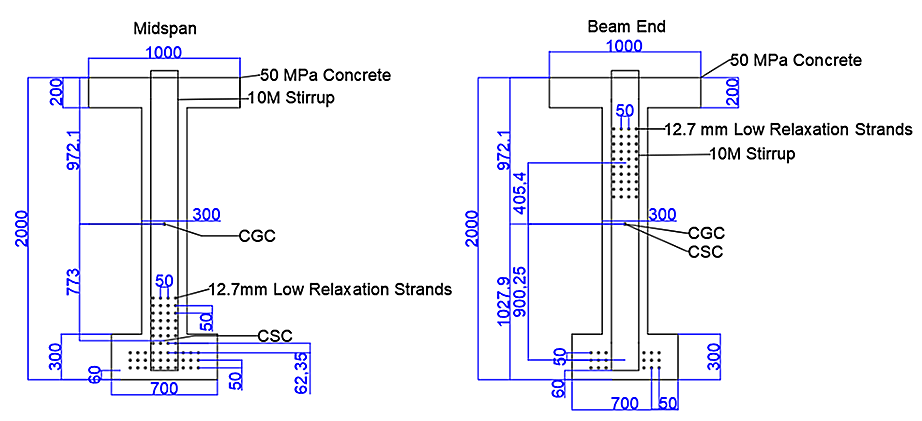
Design of Prestress Concrete Girder
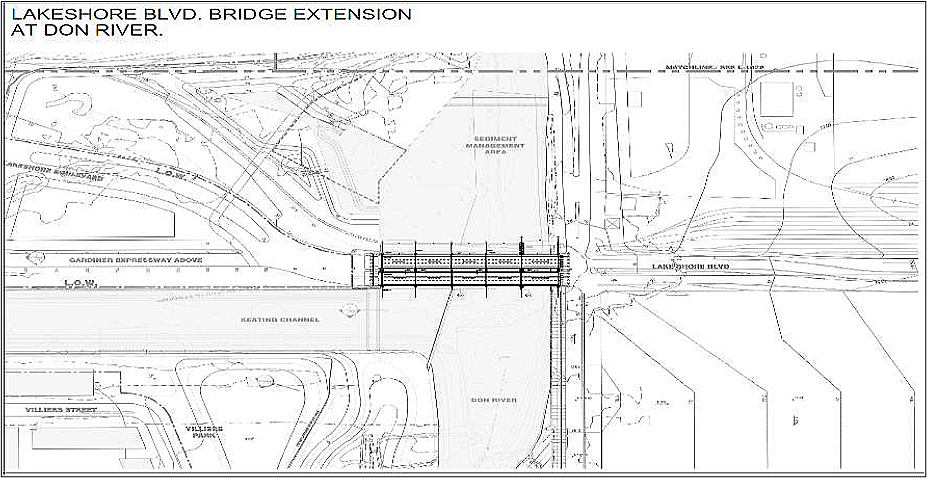
Plan View of Lakeshore Boulevard Bridge at Don River
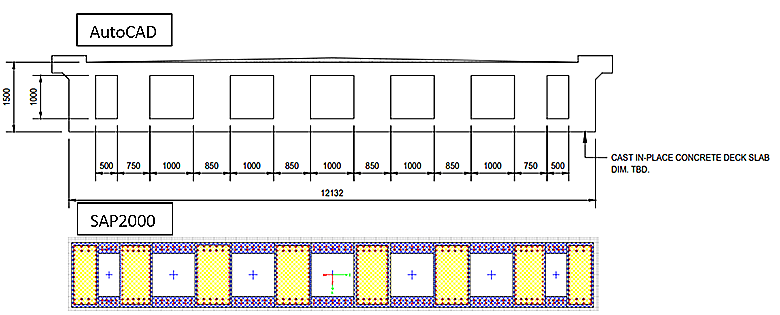
Modeling the Reinforced Concrete Hollow Core Deck Slab in SAP2000
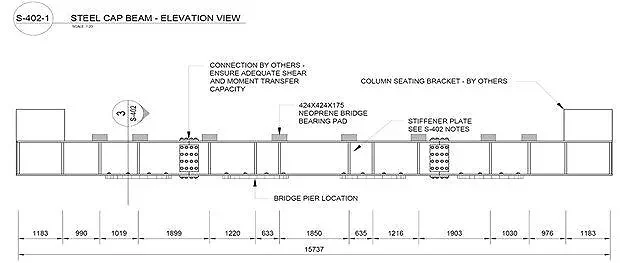
Design of ASTM A913 Gr.65 W1000X883 Steel Cap Beam