UHP-FRC Research
Four-Point Loading Beam Test
Design and Fabrication of Specimens
Design, Fabrication, and Casting of Beam Specimens
Steel Coupon Test
The emergence of ultra-high-performance fibre-reinforced concrete (UHP-FRC) addresses key limitations of conventional concrete, including its brittle behaviour and limited tensile capacity. UHP-FRC enables the design of thinner, lighter structural members, reducing material usage while enhancing structural performance. However, challenges arise in the flexural design of UHP-FRC members when conventional reinforced concrete design approaches are applied. In particular, members with the industry-standard 2% fibre content have been observed to exhibit brittle failure following peak load.
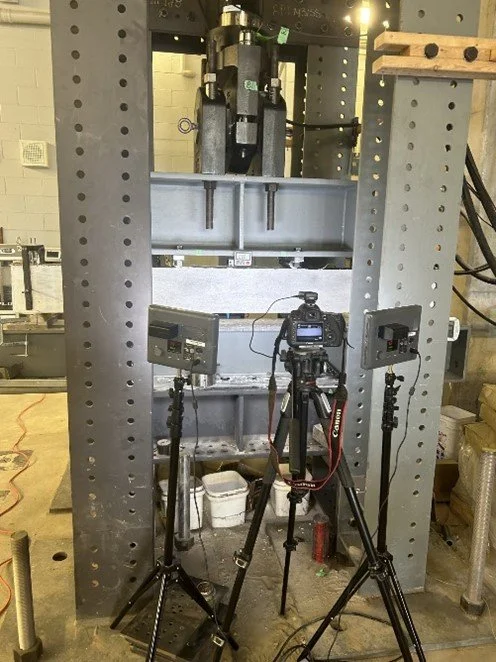
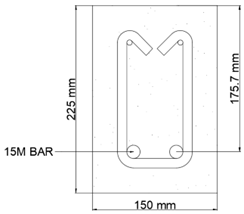
To investigate this behaviour, four UHP-FRC beam specimens were designed with varying fibre contents (1% and 3%) and reinforcement ratios (1.5% and 2.3%). The beams were instrumented with distributed fibre-optic sensors (DFOS) along the longitudinal reinforcement to capture strain distribution during four-point bending tests.
Compression Test Setup
Results of UHP-FRC Compression Tests
Uniaxial Steel Coupon Test

Material Characterization
UHP-FRC Compression Tests

UHP-FRC Behaviour in Compression
Stress-Strain Curves of Steel Reinforcement Specimens
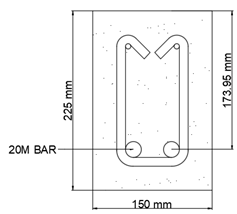
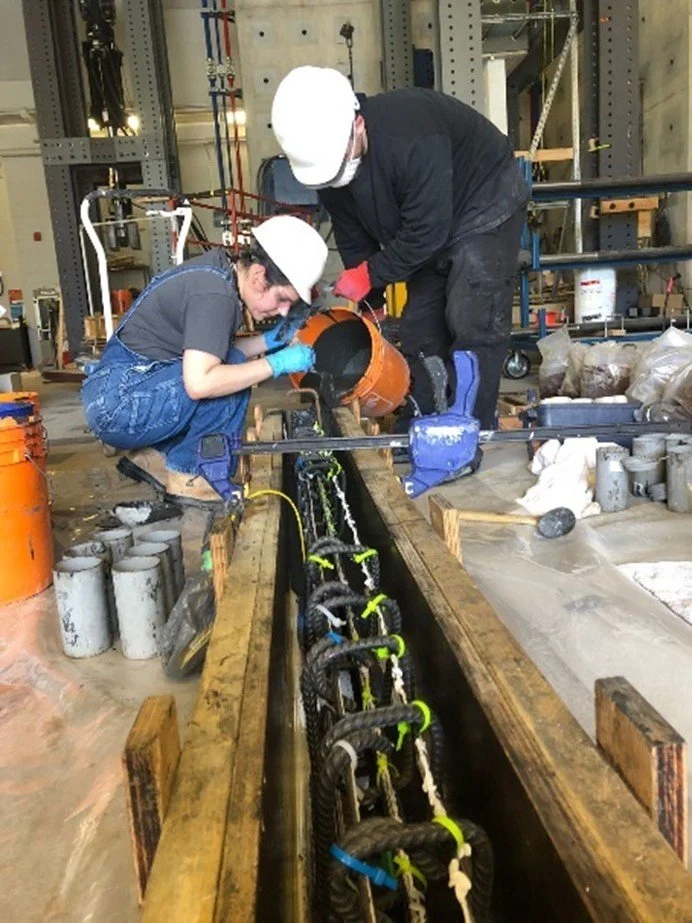
Four large-scale beam specimens were constructed with two reinforcement ratios (1.5% and 2.3%) and two fibre contents (1% and 3%) to evaluate their influence on structural performance. Reinforcement cages were fabricated and instrumented with strain gauges at midspan, as well as distributed fibre-optic sensors (DFOS) along the longitudinal reinforcement and top support wire to capture both discrete and continuous strain measurements.
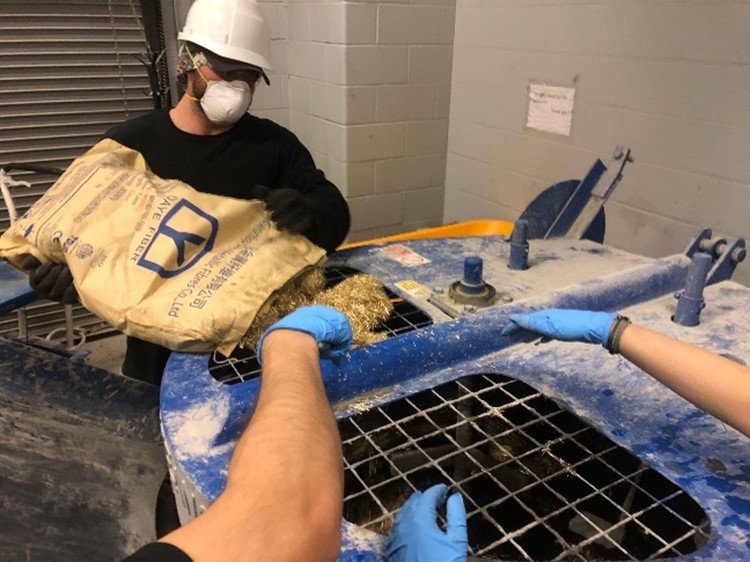
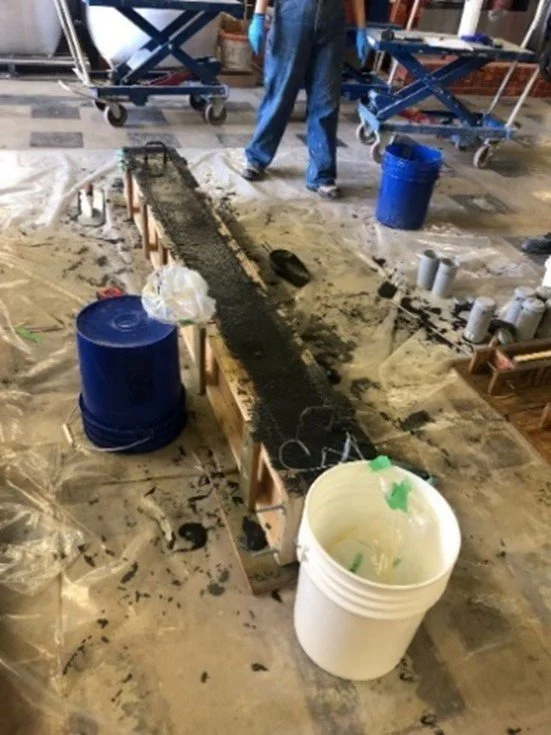
UHP-FRC beams and companion material characterization specimens were cast using a commercially available UHP-FRC premix (Sika). The casting process followed the procedures outlined in ASTM C1856/C1856M-17, and all specimens were moist-cured until the day of testing. Following curing, the specimens were prepared for experimental testing.
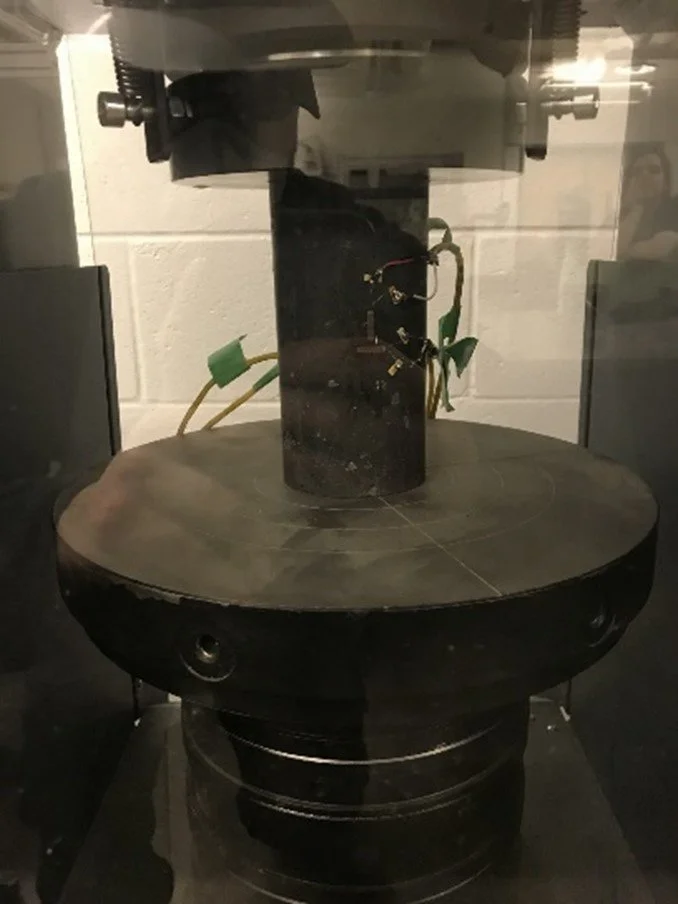
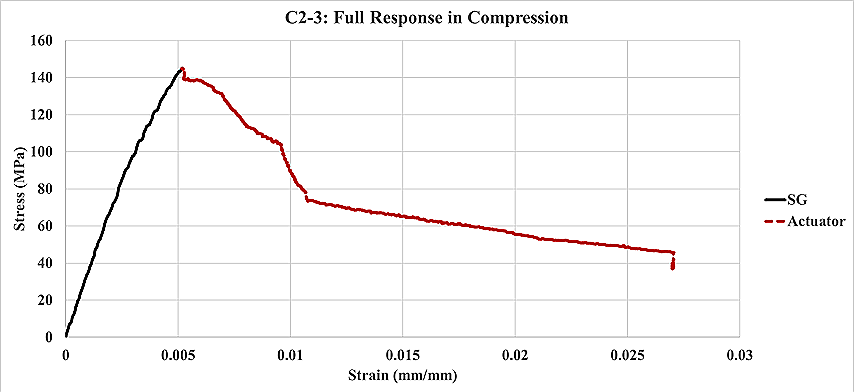
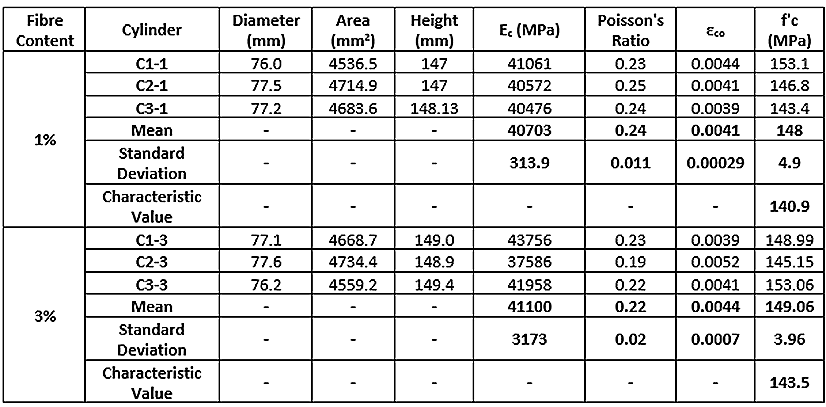
UHP-FRC cylindrical specimens were tested in compression to determine key material properties, including compressive strength, elastic modulus, and Poisson’s ratio at both 28 days and the time of beam testing. The specimens were instrumented with strain gauges to measure axial and lateral strains, and testing was conducted in accordance with ASTM C469/C469M-10.
A key outcome of the program was the successful capture of post-peak compressive behaviour, which is typically difficult to obtain for cementitious materials. This was achieved using displacement-controlled loading at a reduced rate, allowing for stable post-peak response measurement. The measured material properties were consistent with values provided by Sika, confirming the reliability of the mixing, curing, and testing procedures.
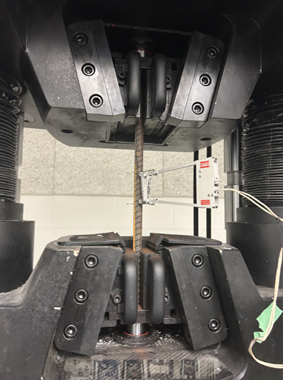
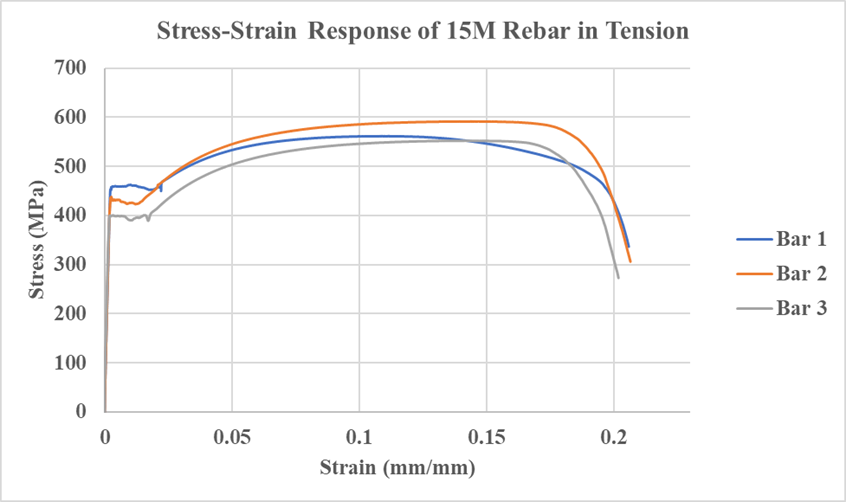
Uniaxial tensile coupon tests were conducted on both sizes of longitudinal reinforcement (15M and 20M) to determine key material properties, including elastic modulus, Poisson’s ratio, yield strength, ultimate strength, yield strain, and ultimate strain. Testing was performed in accordance with ASTM E8/E8M-16.
Four-Point Loading Beam Tests
Evaluating the Flexural Response of Ultra-High-Performance Fibre-Reinforced Concrete Beams
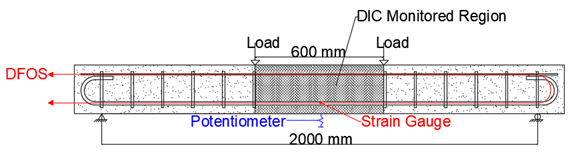
Four-Point Loading Beam Test Schematic
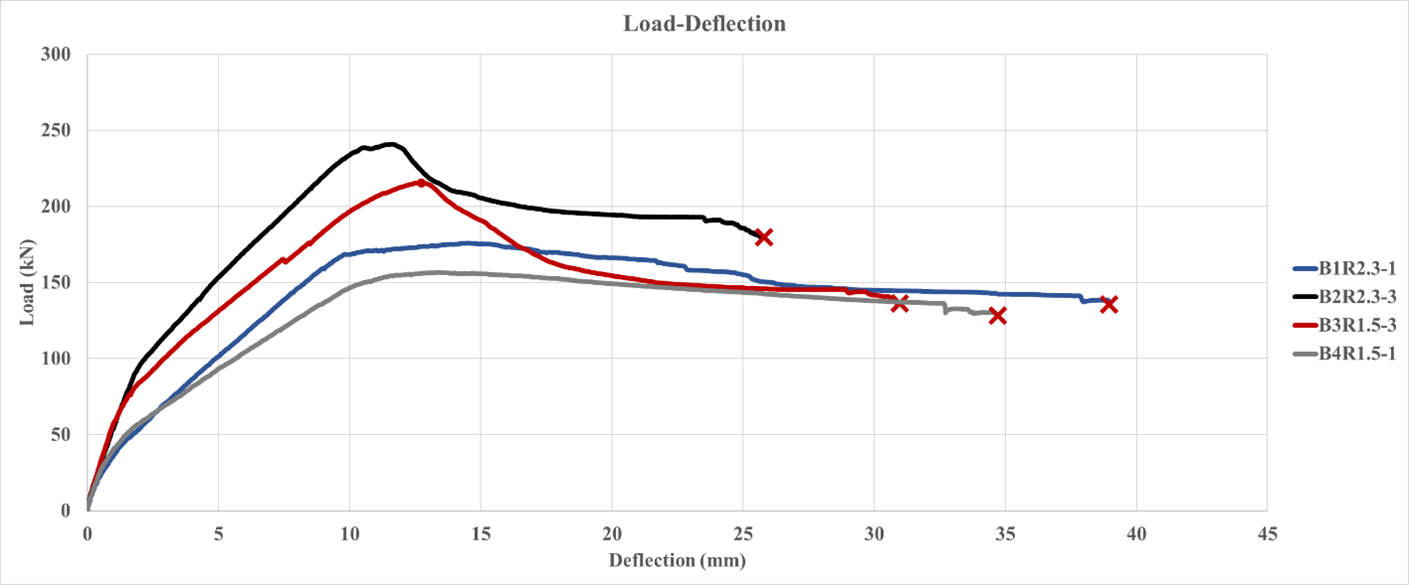
Four-Point Loading Beam Load-Deflection Curves
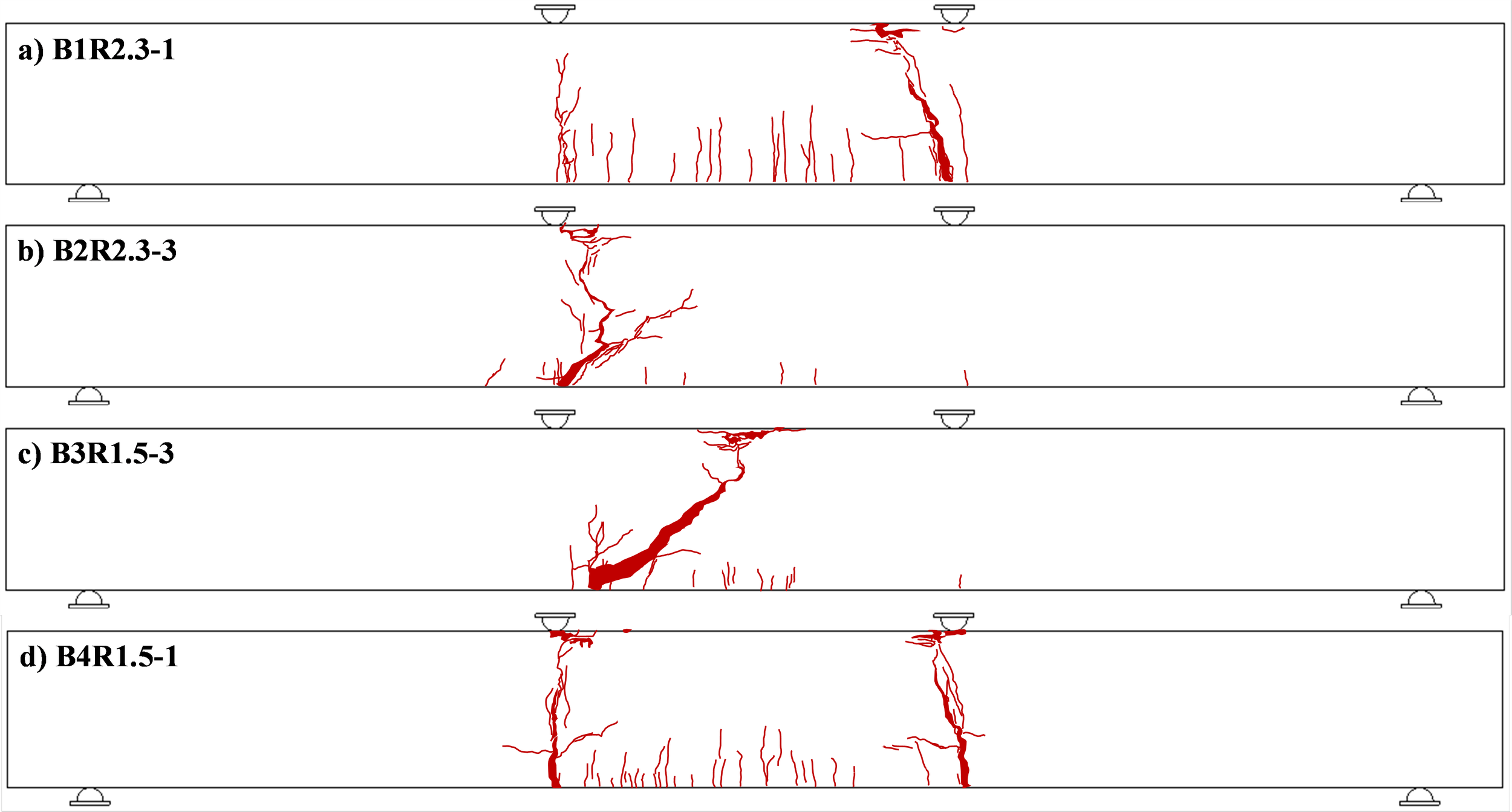
Crack Distribution of UHP-FRC Beam Specimens
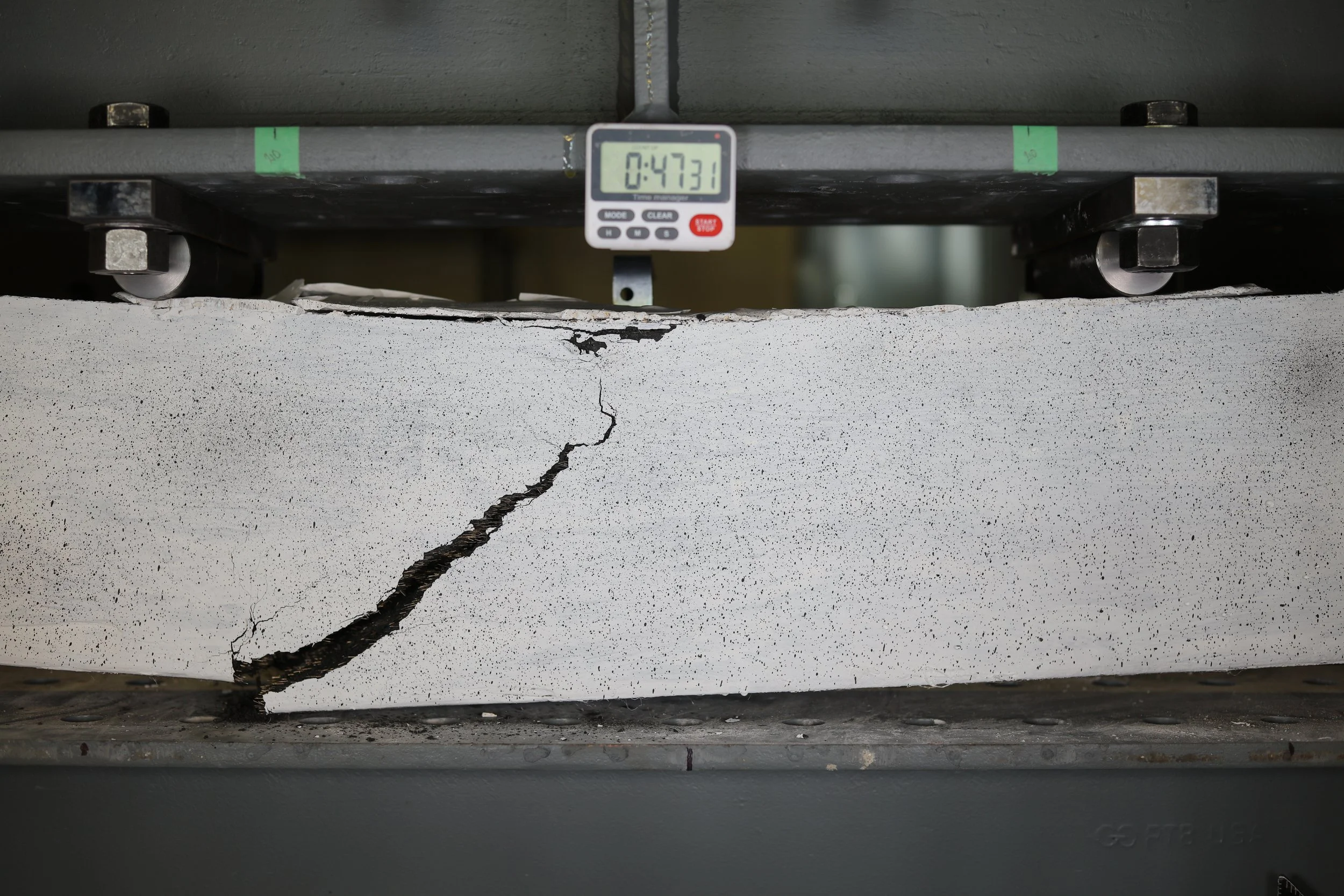
Four UHP-FRC beam specimens with varying fibre contents (1% and 3%) and reinforcement ratios (1.5% and 2.3%) were tested under four-point loading to investigate the interaction between the cementitious matrix and longitudinal reinforcement, and its influence on flexural behaviour.
Results showed that reducing the volumetric fibre content led to more ductile behaviour, which is desirable in beam design as it provides greater warning prior to failure. This response was attributed to reduced tensile and bond strength of the UHP-FRC matrix, promoting distributed cracking along the beam length and enabling plastic deformation of the reinforcement over a larger region. In contrast, increasing the reinforcement ratio resulted in higher peak load capacity.
The conclusions of this study are as follows:
Higher fibre contents led to crack localization and more brittle post-peak behaviour
Lower fibre contents promoted distributed cracking and increased plastic hinge length
Distributed fibre-optic sensing (DFOS) captured strain penetration and plastic hinge development
Fibre content had limited influence on compressive behaviour
Ductility was governed by strain distribution, curvature, and plastic hinge length
Reducing fibre content and increasing reinforcement ratio improved post-peak performance
The findings from this study were contributed to the CSA Group committee developing Annex A8.1 of CSA S6, providing experimental insight to inform the flexural design of steel-reinforced UHP-FRC members.
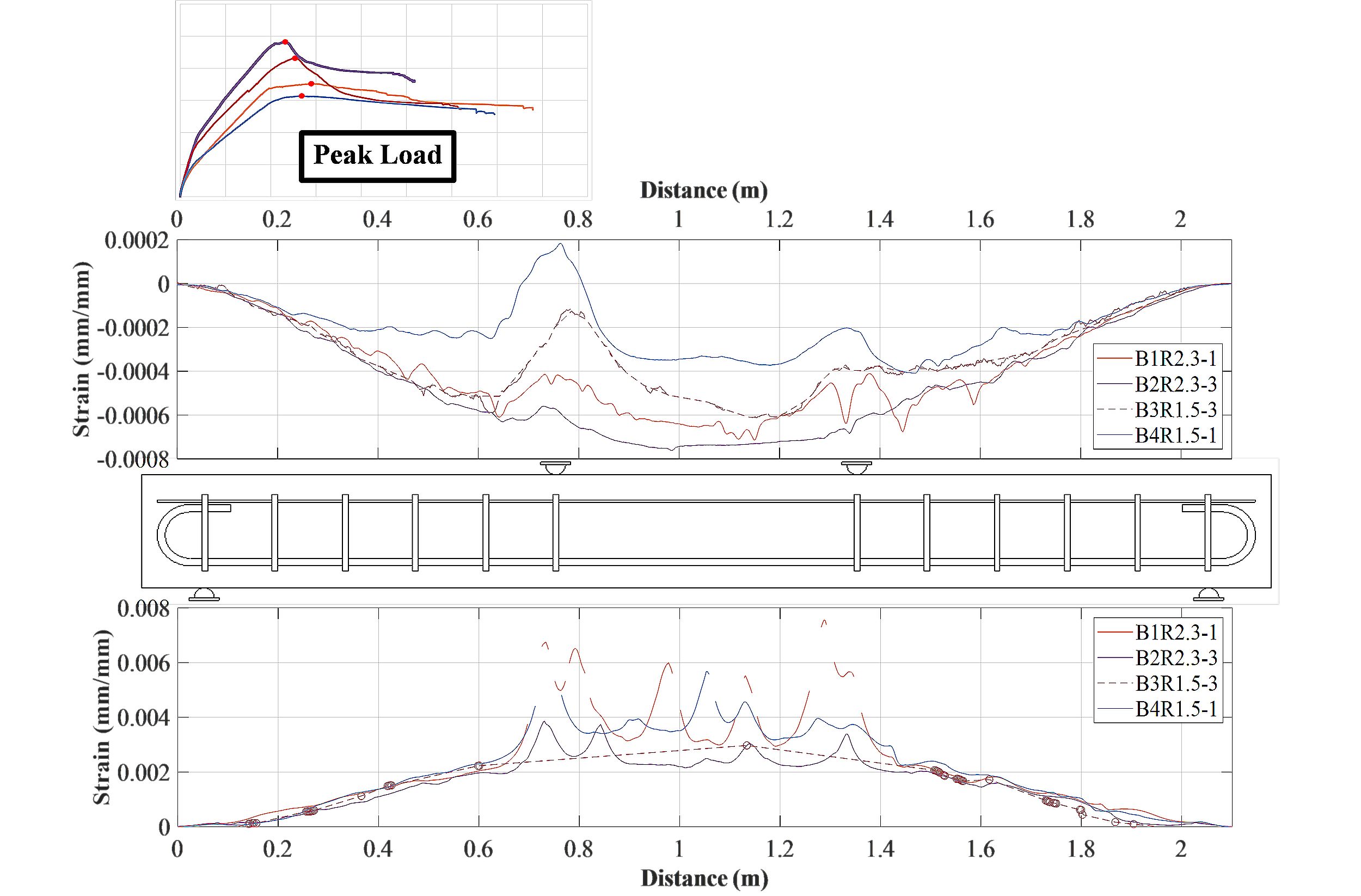
Distributed Strain along Top Support Wire and Longitudinal Reinforcement at Peak Load